
The art was
selling itself.
The website wasn't.
A highly engaged Instagram audience was arriving and leaving without buying. The marketing wasn't broken. The on-site journey was.
rate reduction
weekly visitors
retention rate
engagement rate
A loyal audience.
A broken journey.
When POW took over in September 2025, FTRLA had something most brands would envy — a genuinely passionate audience arriving from Instagram at a 97.8% engagement rate. People were interested. They were clicking through. They were landing on the site.
Then they were leaving.
Average weekly visitors sat at 73. Product pages were being viewed but not converting. Add-to-carts were sporadic. Nobody had mapped exactly where the £240+ purchase journey was breaking down.
The problem wasn't the art. It wasn't the audience. It was the path between the two.
"The marketing wasn't broken. The conversion path was. Instagram was doing its job perfectly — delivering highly engaged visitors. The site was losing them the moment they arrived."
Visitors arrived from Instagram — a visually rich, curated environment — and landed on a page that didn't match that energy. The narrative wasn't pulling them in fast enough.
We identified 7 checkout abandonments in a single tracked period — users who reached the final stage and stopped. On a £240+ product, each one was a meaningful lost sale.
With organic social as the primary traffic driver, the majority of visitors arrived on phones. The site was built desktop-first — the wrong way round entirely.
Users who reached the final purchase stage and stopped. Shipping variability at checkout was the primary cause — a fixable problem costing real revenue.
We mapped the drop-off.
Then we fixed it.
We started with the data before touching the design. Four weeks of analysis across GA4, Squarespace Analytics and Google Search Console before a single pixel moved.
What that told us: the marketing was working. Instagram was driving engaged traffic. The problem was entirely on-site — a conversion path losing people at three distinct points.
Only then did we design.
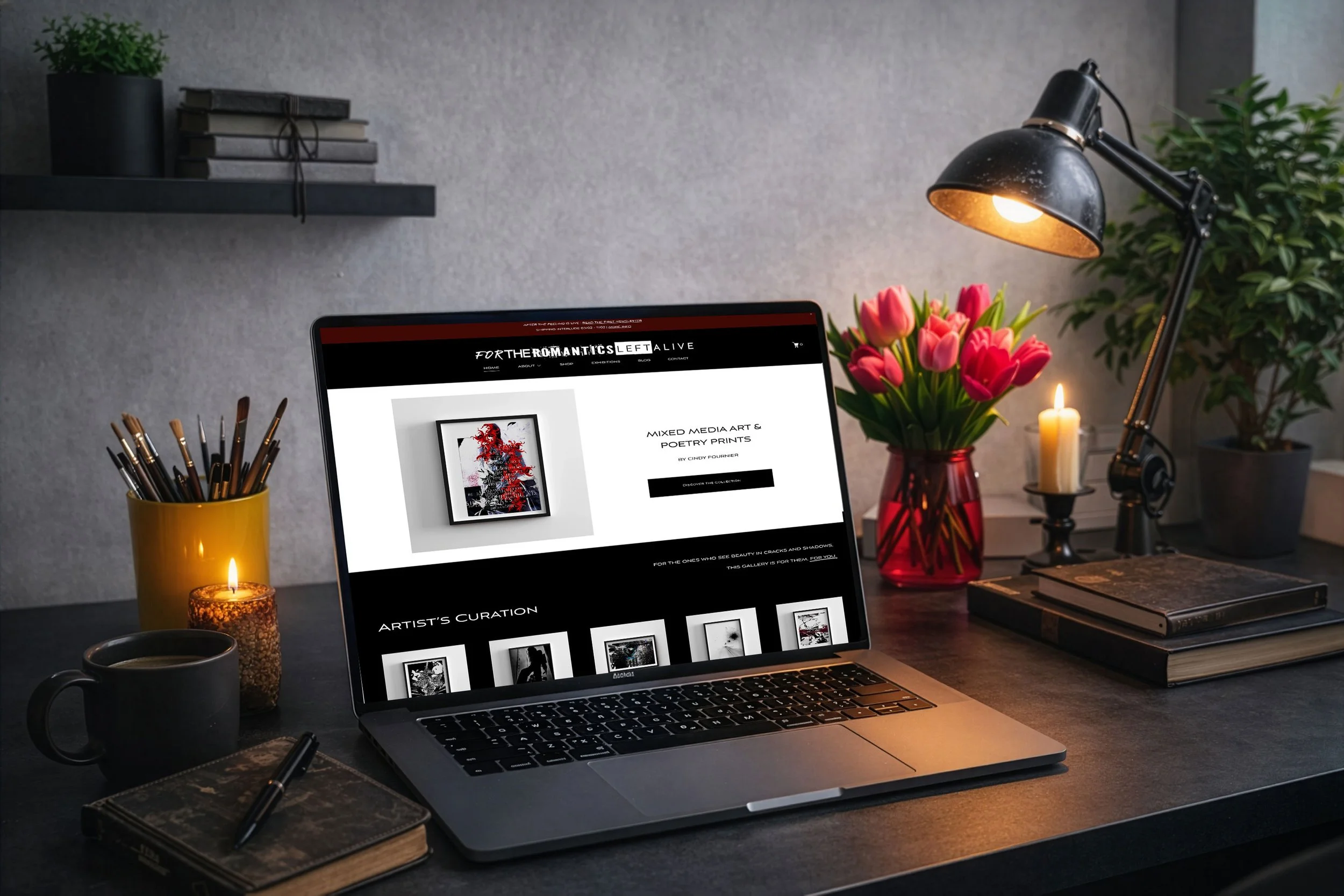
Restructured to pull visitors directly into the world of the work — and from there into the collection. The new landing page recorded a 0% bounce rate across 45 users in GA4 — a small but telling sample that every single person who arrived stayed and engaged.
Every interaction redesigned for the social scroll — the way FTRLA's audience actually arrives. Not an adaptation of the desktop experience. A rebuilt one.
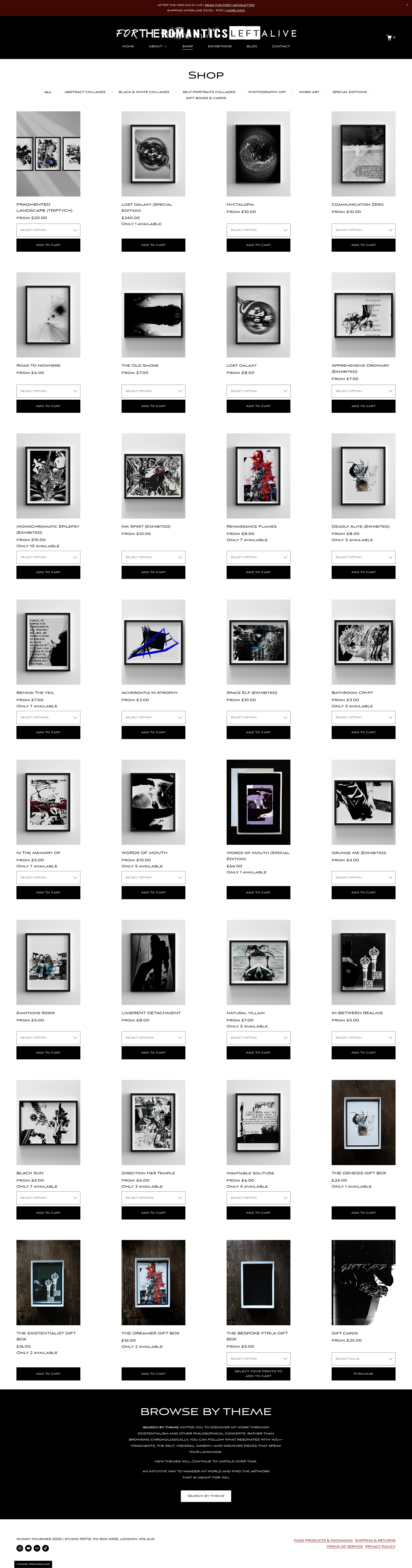
Stronger visual storytelling on each product page, clearer paths to the shop. Reducing the distance between "I like this" and "I want this."
The 7 checkout abandonments were mapped to a specific cause — shipping variability at the final stage. A clear recommendation was delivered to address it directly.
Mobile
Before
After
What changed
after launch.
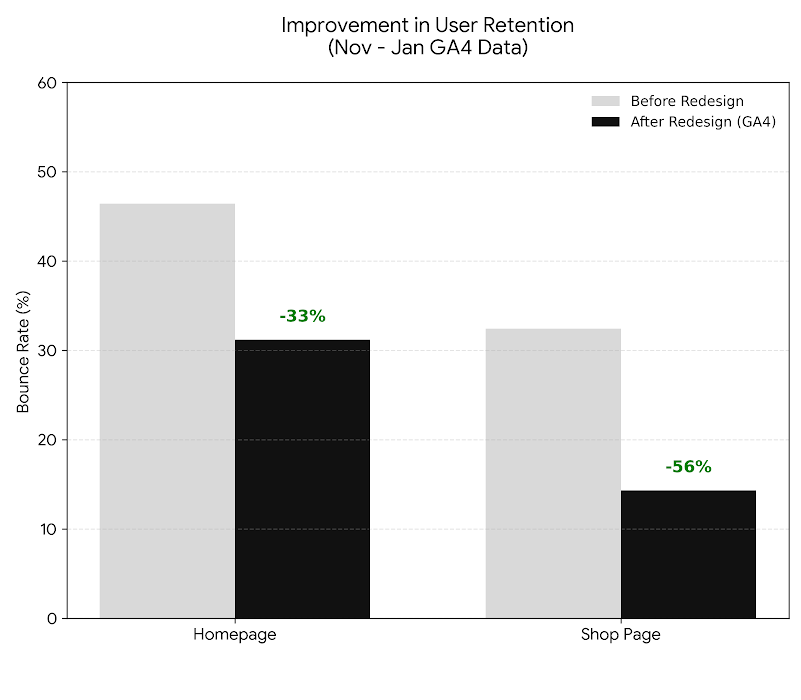
Measured across GA4 and Squarespace Analytics comparing the periods before and after the October 2025 redesign launch.
Homepage engagement rate dropped from 46.4% to 31.2% in the 28 days post-redesign. No paid traffic changes.
Average weekly visitors grew from 73 pre-engagement to 116 post-redesign. Organic growth only.
7 in 10 visitors who reached the shop explored further into product pages rather than immediately dropping off.
The audience arriving from Instagram were almost universally engaged — 97.8% of social sessions were active, not passive. The audience was never the problem.

What we fixed —
and what we told them.
"The redesign fixed what it was built to fix. But the data also told us something the website alone couldn't solve. At £240+ per piece, first-time buyers need more than a good website — they need trust, social proof, and a reason to believe."
FTRLA had a luxury pricing challenge. That's a content and brand strategy problem, not a UX problem. We handed the client a clear brief: the conversion path is now clean.
The next phase — artist storytelling, purchase reassurance, and the trust signals that turn a first visit into a first sale — was beyond the scope of this engagement. But the foundation is there.
Most agencies would have stopped at the traffic numbers and called it a win. We gave the client the full picture.
It almost always comes down to one of three things: the message isn't clear, the journey has friction, or the trust signals aren't there. The Clarity Audit finds which one is costing you.
Book the Clarity Audit ← Back to our work